
Ask anyone who's tried to rent a traditional apartment in Colombia and the same word comes up: fiador. It's the single biggest reason a foreigner with money in the bank still gets turned away at the door. You found the apartment, you can pay for it — and then the contract asks for something you almost certainly don't have.
Then a furnished place finally quotes you, asks for a deposit, and someone on an expat forum tells you deposits are illegal in Colombia. That's half right, and the half that's wrong costs people money. Here's what a fiador actually is, what the law actually says about deposits, and why those are the same story told from opposite ends.
What a fiador actually is
A fiador is a guarantor. The underlying figure in Colombian law is the fianza: someone promises to answer for your debt if you don't. It's an accessory obligation — it hangs off yours rather than replacing it — and in its pure form it comes with two defenses the guarantor can raise.
The first is the beneficio de excusión: the fiador can tell the creditor to go after the tenant's assets first and come back only once those are exhausted. The second is the beneficio de división: where there are several fiadores, each answers only for their share.
Both are excellent for the fiador and useless to the landlord, which is why you will almost never meet a plain fianza in a Colombian lease. The contract says solidario, and both defenses are waived on the page.
Codeudor solidario — the one they actually want
A codeudor solidario is not a backup. They are a co-debtor on equal footing with you from the day the contract is signed. No excusión, no division: if rent goes unpaid, the landlord can go straight to the codeudor for the whole amount without exhausting you first.
That's the figure the market runs on. When an agency here says 'fiador', what's actually in the contract is nearly always a codeudor solidario, or a fianza with both benefits renounced — the same result under a friendlier word. Worth knowing before you ask a friend to sign, because what you're really asking is that they take on your rent as their own debt.
The bar you have to clear
The requirements are specific and they don't bend much. A guarantor is typically expected to show income of around twice the monthly rent — and where two are required, that's each of them, not the pair between them. Above a certain rent level the study wants at least one guarantor who owns property outright, evidenced by a certificado de tradición y libertad issued within the last thirty days.
Add cédula, bank statements going back a few months, and the agency's own application form. It isn't a favor someone does you. It's a credit file, and it gets assessed like one.
Who actually sets the terms
This is the part that surprises people: the owner is usually not the one making the rules.
Most traditional leases here are administered by an agency, and the rent itself is underwritten by an afianzadora — a guarantee company that pays the owner whether or not the tenant does, then pursues the tenant and the guarantors itself. The owner has bought certainty. The afianzadora carries the risk.
Whoever carries the risk writes the rules. That's why the requirements are rigid, why a sympathetic owner can't wave them through, and why 'the owner seemed flexible about it' evaporates at the study stage. You aren't being assessed by the person who showed you the apartment. You're being assessed by an underwriter you will never speak to.
The CDT route, and its catch
Where there's no local guarantor to be had, the workaround the market offers is a CDT — a certificado de depósito a término, money locked in a term deposit at a Colombian bank. It stays in your name. It isn't handed to the landlord. It's frozen for the length of the lease, pledged as backing, and released when the lease ends clean.
Three catches. The sums are not small: agencies commonly ask for the equivalent of five to nine months of rent, and someone with no economic history in Colombia has been asked for a full year. It needs a Colombian bank account, which for a newcomer is its own months-long project. And its legal footing is less settled than it's usually presented — some Colombian commentary treats a CDT pledged to secure a residential lease as exactly the sort of thing the deposit prohibition below was written to catch.
Why it stops newcomers cold
The requirement assumes a life you haven't built yet. A property-owning friend willing to sign for a stranger, a Colombian credit history, a local income record — these take years, and most people arriving in Medellín have none of them on day one. It isn't about whether you can pay. It's that the traditional system was designed for locals, and it quietly excludes everyone else. Plenty of would-be renters spend their first weeks losing apartments they could easily afford.
And what about deposits?
Somewhere in your first month here, someone will tell you that security deposits are illegal in Colombia. They're half right, and the half that's wrong is the expensive half.
The law they have in mind is Ley 820 de 2003, which governs arrendamiento de vivienda urbana — urban residential leases. Its article 16 is short and blunt: in residential lease contracts you cannot demand cash deposits or any other kind of caución real to secure the tenant's obligations. And it shuts the obvious side doors in the same breath. Those guarantees can't be arranged indirectly, or through a third party, or in a document separate from the lease, or under a different name.
There is one narrow thing the statute does allow, and it isn't a damage deposit: article 15 permits a guarantee for domiciliary utilities, capped at two billing periods, constituted in favor of the utility company rather than the landlord.
So on a standard unfurnished residential lease the position is genuinely clear. No deposit. Not renamed, not held by the agency, not tucked into a side letter. Ley 820 is public-order law, so a clause that breaks it isn't merely unenforceable — it has no effect at all.
Which is exactly why the fiador exists
Now put the two halves of this article together, because they're the same mechanism seen from either side.
The law took the landlord's cash security away and left the personal kind standing. Article 16 bans cauciones reales — deposits, pledges, security over things. It says nothing about cauciones personales, where a human being promises to pay. So that is what the market built instead: the fiador, the codeudor solidario, the afianzadora policy, and the blocked CDT at the edges.
That's the trade Colombia made. A landlord shouldn't get to sit on a tenant's money, so the market demands a person instead. The wall you hit in your first week isn't a quirk of local culture. It's the direct downstream consequence of a tenant protection.
Furnished rentals: the honest gray area
Which brings us to the awkward part. Nearly every furnished operator in Medellín asks for a deposit. If article 16 is that blunt, on what basis?
There are two arguments, and neither has been cleanly tested.
The first is that the deposit isn't against the apartment at all — it's against the furnishings. A furnished home is let with an inventory of the owner's actual goods: the sofa, the television, the plates, the linens. Leasing bienes muebles is an ordinary Código Civil matter, not an arrendamiento de vivienda urbana, and article 16 speaks only about the latter. On that reading the deposit secures the contents rather than the home, and sits outside the prohibition.
It's a real argument, though not a settled one: whether an inventory-based furniture deposit is a genuinely separate arrangement is a question nobody has definitively answered.
The second argument is about time, and the number people quote is real — it is just not in the law they think it is. It sits in Decreto 2590 de 2009: anyone who hands over a property for use and enjoyment, for payment, habitually, for periods of under thirty calendar days is a provider of tourist services. The tourism law — today Ley 2068 de 2020 — is what then obliges that provider to hold an RNT. Thirty days is the clearest line in this whole subject and it is written down, which is more than the furniture argument can say. Habitually is part of it, too: letting your own place out once over a long weekend does not make you a tourism provider.
Read what it actually does, though, because this is where the argument is usually stretched. The decree says who has to register as a tourism provider. It does not say the contract stops being a lease, and no norm anywhere says Ley 820 switches off below thirty days. That step — short stay, therefore no residential statute — is an inference. It is a reasonable one, since somebody here for a week is plainly not making the place their home, and Ley 820 governs a property destinada a vivienda. But it is reasoning, not text. Above thirty days even the reasoning runs out.
Where that actually leaves you
The honest summary is less satisfying than either camp would like.
On an unfurnished residential lease the prohibition is clear, and you shouldn't be paying a deposit under any name. On a furnished rental the position is unsettled. There is no statutory exception for furnished homes, no ministry guidance carving them out, and no settled line of jurisprudence either way. What there is, is an interpretation the market has adopted almost universally and that essentially nobody has litigated.
So: nearly every furnished operator asks for a deposit. That's market reality, not settled law. The line worth leaving with is that in a furnished rental the deposit is against the furnishings — the owner's actual goods — rather than against the apartment. That's the basis on which it's asked. It isn't a rule, and anyone telling you it's definitively legal, or definitively illegal, is telling you more than anyone currently knows.
How the deposit works in practice
Assuming you're renting furnished and a deposit comes up, this is the shape of it in Medellín.
Amounts run from around 30% of the monthly rate at the low end up to a full month, which is normal and common. The nicer and better-equipped the home, the closer to a full month it tends to sit, and some operators go higher on high-value furnished properties. It should track the value of what's actually in the apartment, because that's what it's there for.
The sequence is usually: see the place, sign the contract, pay the deposit — which is what takes the home off the market for your dates — then pay the first month on arrival. Frame it by what it does rather than what it costs. It isn't a fee and it isn't rent in advance. It holds your dates and it covers the furnishings, and if the furnishings come back the way they went out, it comes back to you.
Before you send anything, get three things in writing: the amount, the conditions under which any of it can be withheld, and the timeline for returning it. A signed inventory with photos at check-in is the single most useful document in the whole arrangement, and it protects both sides equally.
Red flags
Pressure is the signal. 'Someone else is about to take it, pay today' — while you still haven't seen the place — is the biggest red flag there is. A real home survives you taking a day to think about it.
You should be able to see it. In person, or on a live video call where they move the camera where you ask rather than sending a recorded tour. A refusal is the answer.
And a rate far below the going rate for the area is bait, not luck. If a two-bedroom in El Poblado is priced like a studio out in the suburbs, the price isn't the opportunity.
The workarounds — and what they cost
Back on the traditional side, people try a few things. Some pay several months up front to offset the missing guarantor — a real strain on cash flow, and not every agency accepts it. Some go through an afianzadora, which means fees and a study that's hard to pass with no local history. Some lean on an employer or a Colombian friend to sign, which puts genuine weight on the relationship. Some tie up a CDT.
All of these can work. None of them are quick, and most defeat the point if you only plan to stay a few months. For a year-long unfurnished lease they may well be worth the effort. For a furnished, flexible stay, they're a great deal of friction for a home you'll hand back before long.
The simpler path: furnished rentals without a fiador
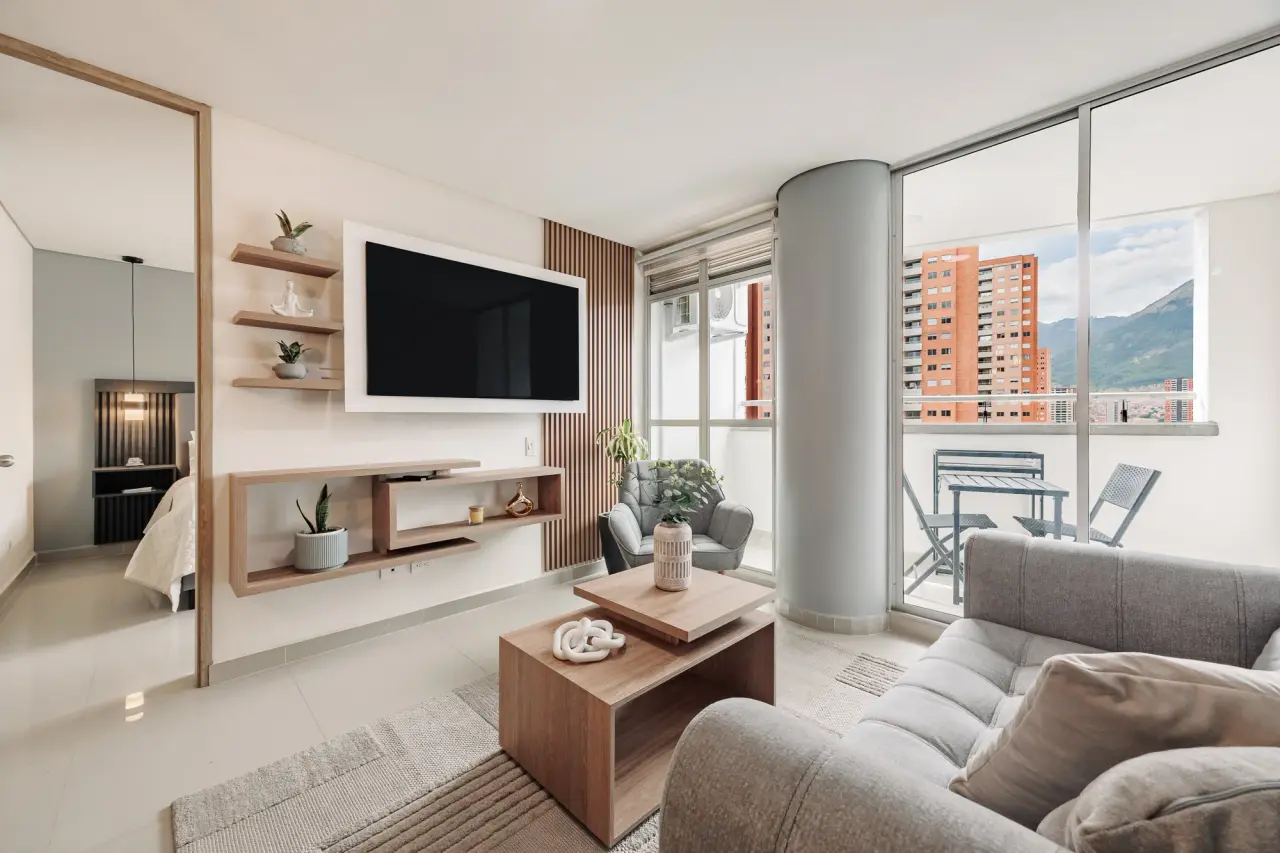
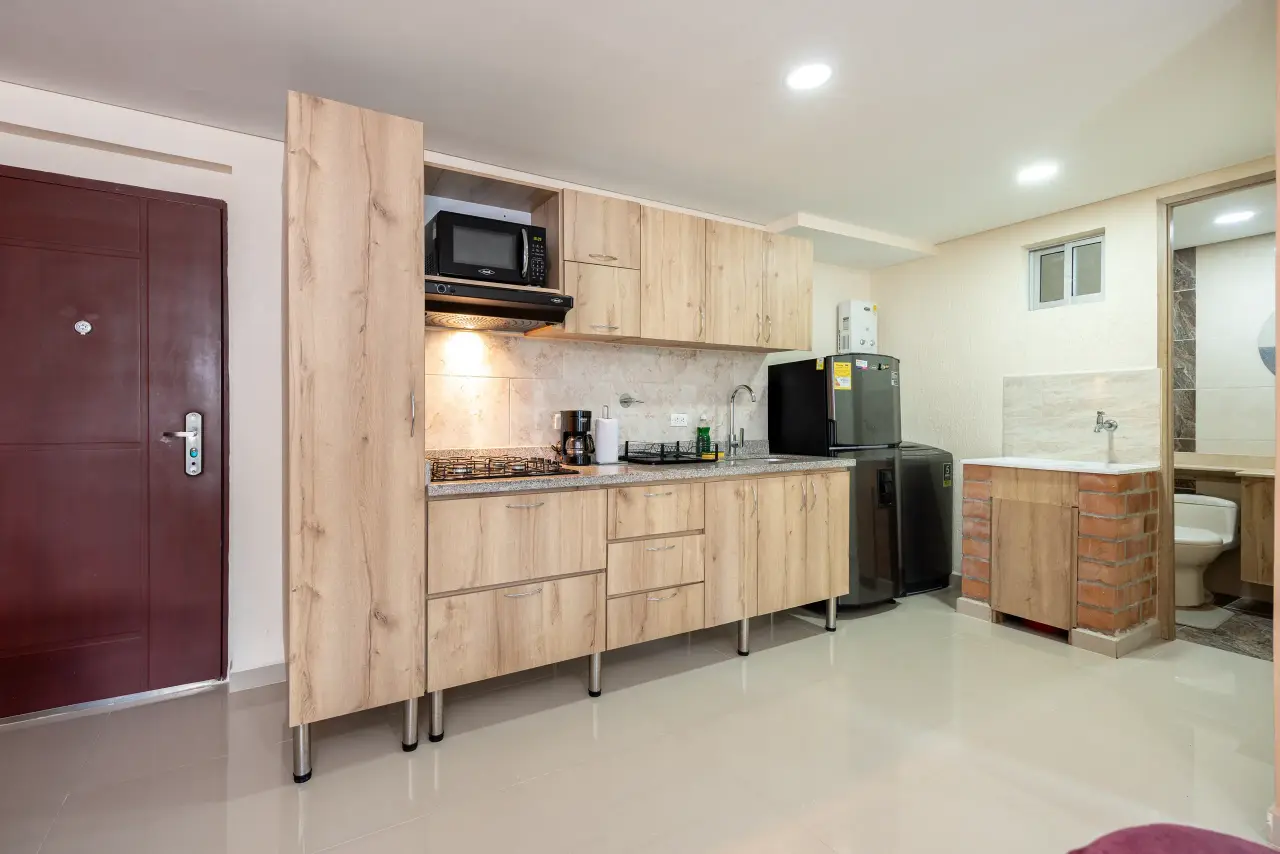
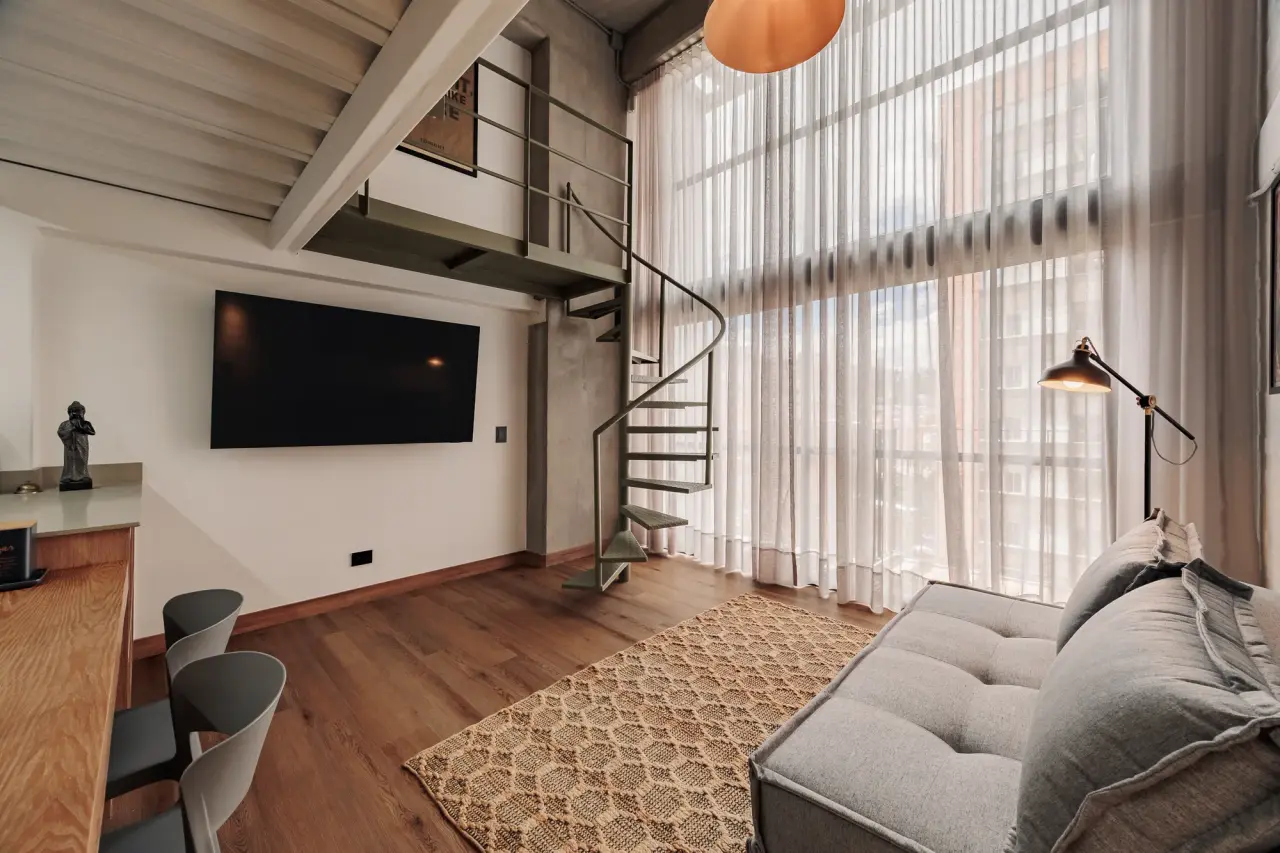
Furnished, monthly rentals run on a different model. Because the home is managed and the stay is flexible, the agreement is short and straightforward. With us there's no fiador, no codeudor and no afianzadora — nobody is asked to produce a property-owning guarantor or pass an afianzadora's credit study. You're treated as a guest staying a while, not a credit risk to be insured against.
What renting furnished actually asks of you
It's a different shape of qualification rather than simply an easier one, and it's worth being straight about that.
A traditional lease qualifies you by proxy. It barely assesses you at all — it assesses whoever is willing to stand behind you, and the bar sits on them. A furnished operator assesses you directly: who you are, that you are who you say you are, and that the stay you're asking for is comfortably within reach. Screening is real, and it looks at income.
What it doesn't do is require you to have already built a Colombian life. Nothing in it depends on knowing a property owner in the same city, and that's the whole difference. The rest is genuinely lighter: the home comes furnished with bills and wifi handled, so there's no opening utility accounts in a language you may not speak yet, and the agreement runs for the months you choose rather than a standard year. The same terms apply in Laureles, El Poblado, Envigado or anywhere else we operate.
Why a furnished operator can skip it
It's worth understanding why this works, so it doesn't feel too good to be true. A traditional landlord rents unfurnished for a year or more, often sight-unseen, and leans on the fiador to cover a worst case they can't actively manage. A furnished operator runs the opposite setup: the home is managed day to day, guests are screened before they book, the stay is shorter and flexible, and a clear agreement on a managed home already covers the normal risks.
The security a fiador provides is handled structurally instead — by how the home is run, not by a stranger's signature. That's why a wall of paperwork is the price of admission on one side of this market and not the other. It isn't a loophole; it's a different model, better suited to someone staying months rather than years.
Renting without the wall
The fiador exists for a reason in the long-lease market, and the deposit rules exist for a reason too — both of them are the system trying to make a stranger's promise bankable. Neither should cost you your first month in the city. If you'd rather skip the guarantor machinery entirely, tell us your dates and neighborhood and we'll send what fits.